

How to Choose the Perfect Cotton Suit Set for Women: A Complete Buying Guide

Shopping for a cotton suit set for women can be confusing once you start comparing options — every listing says “premium cotton,” but not every piece actually breathes, fits, or looks like its photos once it arrives. If you’ve been burned by a stiff or see-through “cotton” order before, this guide walks through exactly what to check before you buy, so you get it right the first time.
Start With Knowing What You Actually Want to Wear
“Suit set” covers a lot of ground, and picking the wrong silhouette for your day is usually why a piece ends up unworn in the closet. Here’s how to think about it:
- Kurta Set (with dupatta) — probably your best bet if you want something you can wear to a wedding one week and a Sunday brunch the next. It’s the most adaptable cotton suit set for women in most wardrobes.
- Kurta Set (without dupatta) — a little lighter, made for office days or running errands. Same comfort, one less thing to manage.
- Co-Ord Set — for when you don’t want to think about what goes with what. The top and bottom are already made for each other, so that decision’s off your hands.
- Suit Set / Anarkali style — for the days that call for a bit more presence — festive events, celebrations. A fuller, statement silhouette without losing the comfort of cotton.
Browse Kurta Sets · Browse Co-Ord Sets · Browse Suit Sets
Not sure where to start? A Kurta Set with dupatta is the safest first buy — it flexes the most. Once you’ve picked your piece, here’s how to style a cotton kurta set for everyday wear.
How to Tell If a “100% Cotton” Suit Set Is Actually Good Cotton
This is the part most people skip, and it’s the reason so many online cotton buys disappoint.
Check the weave, not just the label. A looser weave breathes so much better in Indian heat — a tightly packed weave can say “cotton” and still feel stuffy by afternoon.
Know the pure-cotton vs. cotton-blend trade-off. Blends hold their shape better and wrinkle less, but they trap heat. Pure cotton breathes beautifully but creases more easily. Neither is “better” — it depends what you’re optimizing for.
Consider fabric weight (GSM). Lighter cotton suits daily comfort; a slightly heavier weight tends to hold up better over time if it’s a piece you’ll wear often.
We keep every Etinika piece 100% cotton because that’s genuinely the trade-off we’d choose ourselves — comfort first, even if it means a little extra care. According to the Cotton Textiles Export Promotion Council, India remains one of the world’s largest cotton producers, and hand-processed cotton garments from regions like Rajasthan are known specifically for breathability suited to the subcontinent’s climate — which is part of why traditional weaves are still worth seeking out over synthetic blends.
Sanganeri Print vs. Handblock Print — What’s the Actual Difference?
Two techniques come up again and again when shopping for a cotton suit set for women, and they’re often confused for each other.
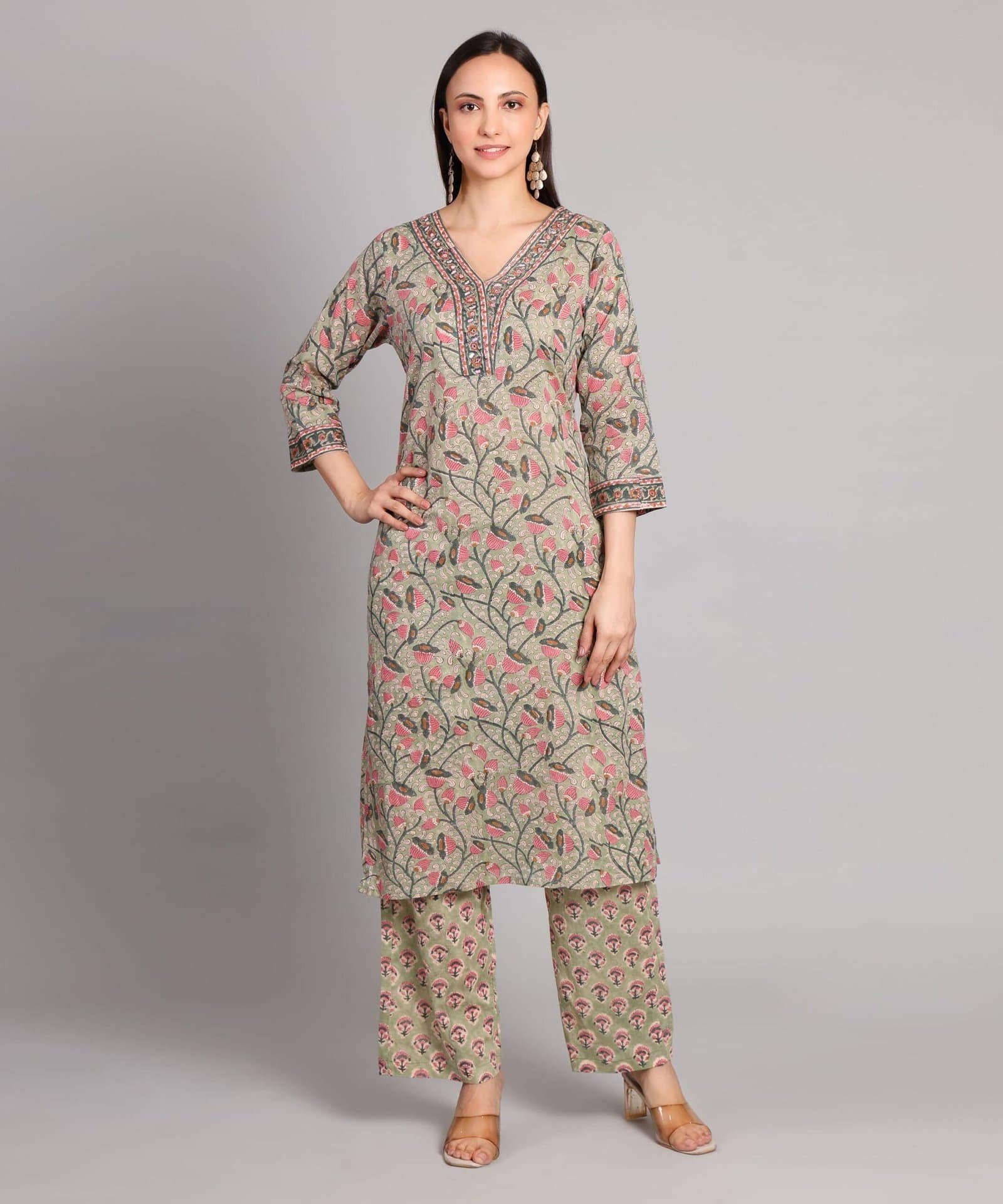
Sanganeri print is screen-printed, with intricate, repeating patterns and a smoother finish — lovely for everyday and semi-festive wear.
Handblock print is literally hand-stamped, piece by piece, which means there’s a bit more texture and natural variation. No two handblock pieces are ever perfectly identical — which is part of the charm if you like knowing your outfit isn’t mass-produced.
Both are authentic Rajasthan craft traditions. Neither is “higher quality” than the other — they just feel and look a little different.
Getting the Size Right When You Can’t Try It On
A few habits that save you a return:
- Check the brand’s own size chart every time — sizing isn’t standardized across Indian ethnic wear brands, so “your usual size” doesn’t always carry over.
- If you’re stuck between two sizes on something meant for all-day wear (like a kurta set), size up. For fitted co-ord sets, stick closer to true-to-fit.
- If a stretch percentage is mentioned, factor that in — pure rigid cotton fits differently than cotton with even a small amount of give.
Buying for an Occasion? Give Yourself Some Runway
Raksha Bandhan falls on August 28, 2026 this year, and if a festive cotton suit set is on your list, it’s worth ordering a couple of weeks ahead — handblock and Sanganeri pieces especially tend to sell out fast in small batches around festival season. The same applies to weddings or family functions on your calendar. Comfort-first doesn’t have to mean less festive — it just means planning a little earlier. Need outfit inspiration too? Check out our Rakhi outfit ideas.
What to Check Before You Check Out
Buying ethnic wear online from a smaller brand for the first time can feel like a bit of a leap.
Cash on delivery, if it’s offered, takes the risk out of a first order.
A clear return or exchange policy, read before you buy, not after something goes wrong.
Real product photos, not just studio shots — prints genuinely look different in daylight, so a brand willing to show both is one that’s not hiding anything.
Frequently Asked Questions
What is the best fabric for a suit set in Indian summers? Pure, loosely woven cotton is generally the most breathable choice for Indian summers — better than cotton-polyester blends, which trap more heat even though they wrinkle less.
What’s the difference between a kurta set and a suit set? A kurta set typically refers to a top paired with bottoms (and sometimes a dupatta), often in a straight or A-line cut. “Suit set” is a broader term that can include fuller silhouettes like Anarkali styles, alongside standard kurta sets.
Is Sanganeri print the same as handblock print? No. Sanganeri print is screen-printed with fine, repeating patterns, while handblock print is stamped by hand piece by piece, giving it more natural texture and slight variation between pieces.
How do I know what size to order in a cotton suit set online? Always check the specific brand’s size chart rather than assuming your usual size — sizing varies between Indian ethnic wear brands. For all-day wear pieces like kurta sets, sizing up slightly is often more comfortable.
When should I order a cotton suit set for Raksha Bandhan 2026? Since Raksha Bandhan falls on August 28, 2026, ordering at least two to three weeks in advance is recommended, especially for handblock or Sanganeri print pieces, which are often made in small batches.
The Short Version
The print you fall in love with first isn’t always the thing that decides whether you’ll actually wear a piece often — the fit, the fabric weight, and how honestly it’s described do that. Explore Etinika’s cotton suit sets — Sanganeri and handblock prints, described the way we’d want them described if we were the ones shopping.
📦 COD available | Shipping across India


